
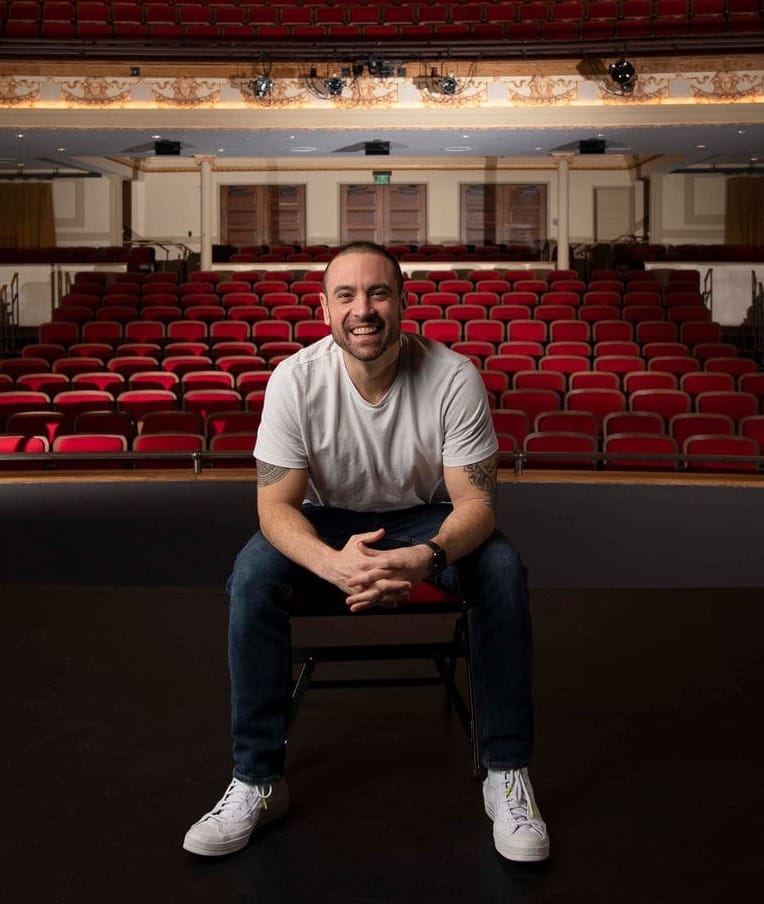
Guiding The Next Generation of Arts Leaders
After years shaping Lynchburg’s creative infrastructure—from local arts education to nonprofit leadership at the Academy Center of the Arts—Geoffrey Kershner is stepping into a broader role, leading the launch of a new Master of Fine Arts (MFA) program in arts leadership at Randolph College. The program draws directly from his experience working with artists, institutions, and communities navigating rapid change.
“Moments of great change require creativity and thinking outside the box,” explained Kershner, who left his role as CEO of the Academy Center of the Arts in December to spearhead this low-residency graduate program. “Many of the leaders we want to attract to this program are artists—or have been artists—and that perspective matters.”
Kershner is leading program design, teaching core courses, recruiting students, and teaching undergraduate courses at Randolph—all while shaping curriculum informed by direct conversations with prospective students about their goals.
The program, which is set to begin in July 2026 is a terminal degree program that will prepare graduates for leadership roles in diverse arts fields and the broader nonprofit sector. Through a blend of online courses, on-site residency, and mentorship with world-class leaders, students will dive deeper into arts and cultural program design, cross-sector collaboration and advocacy, organizational strategy and sustainability, and inclusive and purposeful leadership.
“Randolph is already experienced with low-residency programs, including a nationally respected creative writing MFA,” Kershner said. “That foundation makes this possible.”
According to Kershner, the college’s Take2 academic model—wherein a student has four sessions instead of two semesters, with two classes per session—and prior low-residency success helped attract early interest from prospective students.
“We want to build future leaders in the arts—but leadership can take many forms,” he said. “Some graduates will lead established nonprofits. Others will become entrepreneurs and create entirely new models.”
Kershner is no stranger to the intricacies of arts leadership. He was a founding member and former artistic director of Endstation Theatre, which is celebrating its 20th year this year. He then went on to lead the Academy Center of the Arts for a decade—walking the organization through its reopening in 2018 after a 60 year closure and pioneering a renewed sense of community engagement through national touring acts, arts education, and accessible facility access to resident companies and local musicians.
“There’s a lot stacked against arts leaders right now,” Kershner shared. “But there are solutions, and I want our graduates to leave knowing they can actually do this.”
That lived experience—building organizations, navigating financial realities, and balancing artistic ambition with community need—now informs the program’s central promise. For Kershner, the MFA is less about theory and more about equipping artists and administrators with the tools, confidence, and adaptability required to lead in a rapidly shifting cultural landscape.
“Five years from now, I want this to be a program known nationally for creating solutions—through the faculty we gather and the students we send out into the world,” Kershner said.



Related Posts
Meet Stacy Garrett
Feb 04, 2026
Liberty Students Bring Hope to Western North Carolina on Hurricane Rebuild Trip
Oct 20, 2025
Meet Chris England
Sep 29, 2025