College Lake Dam removal and stream restoration has been completed. Officials say this eliminates safety risk and enhancing environmental protection. The project was overseen by Lynchburg Water Resources.
Construction for the College Lake Dam Removal & Stream Restoration Project is complete, marking a significant milestone in the City of Lynchburg’s commitment to public safety and environmental stewardship.
The removal of the high-hazard College Lake Dam, a top City priority following the August 2018 overtopping of the dam during a major storm event, has eliminated a long-standing safety risk to the community. Following the dam’s removal during the early stages of this construction project in May 2024, College Lake Dam has been delisted as a high-hazard dam, and downstream areas of Blackwater Creek no longer face an inundation risk from a potential dam failure.
“This project was first and foremost a public safety project,” said Erin Hawkins, Water Quality Manager for Lynchburg Water Resources, who served as the project manager for the City. “Removing the risk that this dam presented to people, property and infrastructure downstream of the old College Lake is a tremendous achievement for the City and our partners in this effort.”
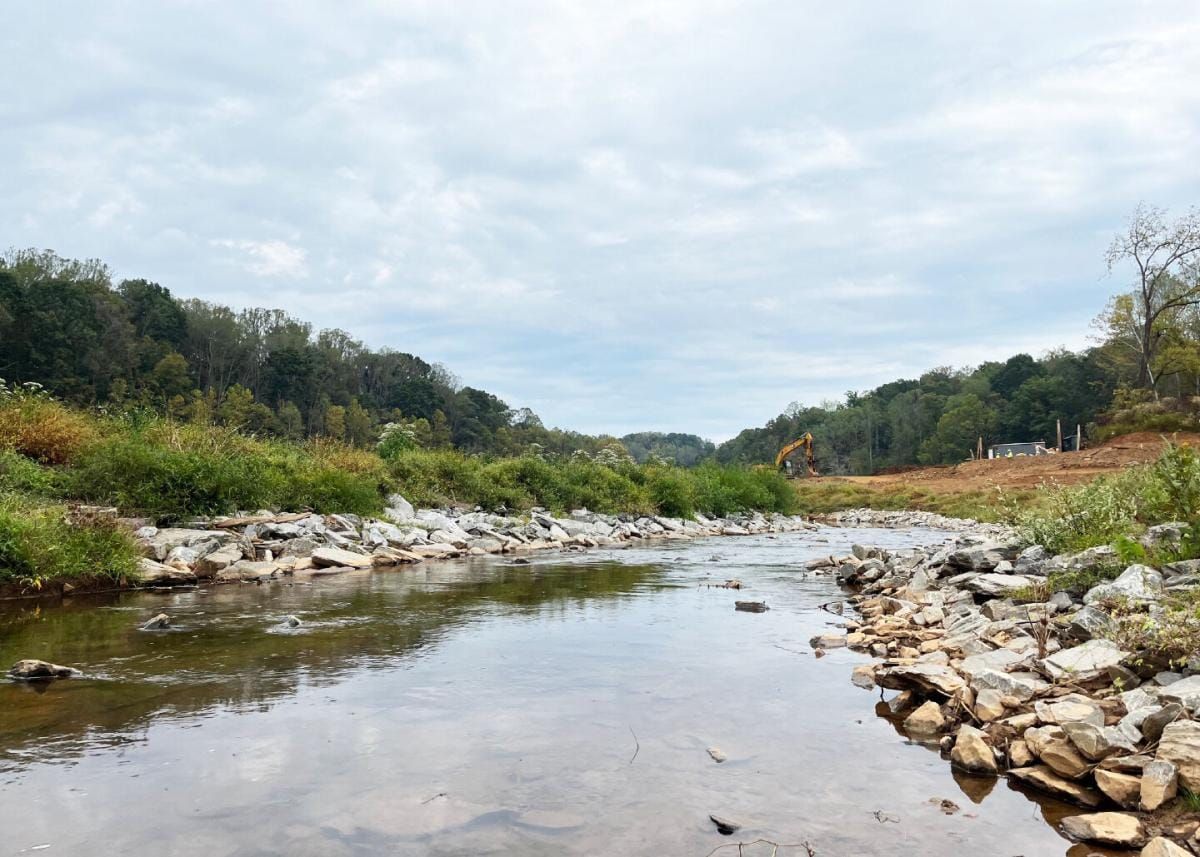
The dam’s removal resulted in the re-emergence of Blackwater Creek through the former lakebed of College Lake, reconnecting the upstream and downstream sections of the creek for the first time in 90 years.
The project’s construction since the final breaching of the dam has focused on restoration of the former lakebed of College Lake into a resilient, thriving ecosystem. This phase of construction has included:
•Removal and management of legacy sediment in the former lakebed of College Lake
•Construction of a new, stabilized stream channel for Blackwater Creek
•Stabilization of the floodplain area surrounding Blackwater Creek
•Creation of new wetlands to improve water quality and encourage wildlife habitat
•Stabilization of the former Lakeside Drive bridge as a future overlook
“One of the biggest takeaways from this project is that, while public safety was top of mind with the dam’s removal, the restoration of Blackwater Creek and the wetlands around it really focused on environmental protection and water quality for the Blackwater Creek, the James River and the Chesapeake Bay,” said Hawkins. “We’re already seeing this area come to life with native plants, pollinators and wildlife.”
The project was done in collaboration with University of Lynchburg and in consultation with environmental engineering firm AECOM and construction management by MBP. Construction was completed by English Construction and subcontractor Resource Environmental Solutions. The City also coordinated with multiple agencies, including the Department of Conservation and Recreation Dam Safety, the Department of Environmental Quality, the U.S. Army Corps of Engineers, and the Federal Emergency Management Agency.
Additional plantings of native grasses, shrubs and trees are scheduled for late winter/early spring. Because of this, and separate work happening on the Creekside Trail, the work area and trail remain closed to the public until further notice. The best location to see the newly stabilized Blackwater Creek and surrounding wetlands is from the sidewalk along the new Lakeside Bridge.
The City of Lynchburg plans to celebrate the completion of this important project in the spring of 2026 as a new growing season begins to showcase the rebirth of College Lake’s former lakebed.
To learn more, please visit the project website.

Related Posts
City of Lynchburg Receives Seventh Place in Population Category for 2025 Digital Cities Survey
Dec 08, 2025
Remembering Arko:
Dec 05, 2025
Bedford County Receives $1M USDA Grant to Restore Historic Montvale School
Nov 24, 2025